






Changing Lives Through the Power of the Horse
The benefits of equine-assisted services have been recognized for a long time. Partnering with horses can have a major physical and emotional impact on people with a wide variety of physical disabilities, cognitive delays or emotional challenges. Granting Lily Creek Farms Therapeutic Riding Center the privilege of your trust will enable you or your loved one to reach health and wellness goals – as well as experience fun and hope – by partnering with horses.
Social
Riding in a group is a great shared social experience. Those receiving services may experience improved self-esteem and belonging in social settings as they share similar experiences with fellow riders.
Emotional
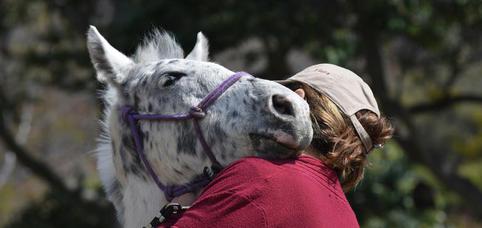
Many people with emotional challenges are able to enjoy equine-based programs that promote physical activity and social interaction. Horses provide a “no judgment” zone that holds space for the entire spectrum of feelings and promotes emotional growth.
Cognitive
Physical
Self-Esteem
People with learning disabilities have the chance to learn through visual, auditory and kinesthetic methods while learning to ride or drive a horse. The horse’s response to the aids given by the rider or driver is natural positive reinforcement and helps participants build skills.
Therapeutic or adaptive riding can be a great source of exercise in which people with physical disabilities may choose to participate. They can participate in riding within their limits of strength and energy and still enjoy an active recreational activity or sport.
Working with horses and learning to communicate with them often leads to a boost in self-esteem. It is very empowering to partner with a thousand pound animal (or even a 200 pound miniature horse!) and realize achievements you never thought possible.
Amputations
People who have experienced an amputation can be successful riders and drivers. Many para-equestrians have successfully competed with an amputation.
Borges de Araujo, Araújo, Santana, Lopes & Franck (2006) studied the use of physical therapy incorporating horses to improve postural steadiness in patients with lower limb amputations. Data were gathered using a platform sensor F-Mat connected to a computer before the first physical therapy session and after the 20th session. Results from the three participants indicated increased speed and distance post-treatment.
Attention Deficit Disorder
Children with attention deficit disorder (ADD) or attention deficit hyperactivity disorder (ADHD) have difficulties with attention and self-control of behavior. Horseback riding requires attention to the instructor and the horse. Children who participate in a riding program will be taught sequential steps for learning to control their horses and become more independent. Riding lessons can be modified in length to accommodate for decreased attention span at the beginning of the program.
Autism
Children and adults with autism participate in a variety programs, including riding, involving horses. All equine-assisted services can benefit the life of a person with autism.
Bass, Duchowny, and Llabre (2008) studied children with autism participating in a 12-week therapeutic horseback riding program. Two instruments were used to measure social functioning before and after the intervention: the Social Responsiveness Scale (SRS) and the Sensory Profile (SP). They found that the children with autism who participated in the therapeutic horseback riding program improved in sensory integration and directed attention compared to the control group.
Macauley (2007) studied children with mild, moderate, and severe autism participating in a 10-week speech therapy session using hippotherapy. The children were evaluated using the Childhood Autism Rating Scale (CARS) as well as attention to task and the number or session goals met. All children showed progress on at least one of the following four CARS subtests: relating to people, listening behaviors, verbal communication, and nonverbal communication.
Brain Injuries
People with brain injuries can experience multiple symptoms related to their injuries. They may participate in a variety of programs depending on their abilities and goals. People with a brain injury who are seeking to pursue a new recreational outlet may benefit from riding. Participants develop skills needed to direct their equine partners through obstacles, cones courses, or on trail rides.
Cerebral Palsy
People of all ages with cerebral palsy may enjoy interacting with horses. Children can learn a sport, such as riding, to share with their peers. Adults may treasure riding as a life-long leisure activity. Horseback riding requires skills including good posture, coordination, and balance to direct the horse. Riders with cerebral palsy may progress from riding with sidewalkers to riding independently. Some people with cerebral palsy may prefer to learn.
Cerebrovascular Accident (CVA) or Stroke
People who have experienced a cerebrovascular accident (CVA) or stroke may experience challenges from deficits resulting from the area of the brain affected by the stroke. Examples of deficits include loss of the use of a limb such as an arm/hand, difficulty finding or understanding words, or balance problems. Lily Creek Farms offer a variety of programs to work with these challenges, and those who have had a CVA may benefit from an enjoyable physical activity involving horses. They can learn to ride or drive with one hand or may use an adapted rein on their weaker side. Riding in a group is a great shared social experience as well as an opportunity to interact with horses.
Deafness
People who are deaf or hard of hearing may experience improved self-esteem and a sense of independence and empowerment by becoming independent equestrians. People with hearing impairments will develop unique ways to communicate with their instructor and equine partner while learning to ride or drive.
Developmental Delay/Cognitive Delay
People who are deaf or hard of hearing may experience improved self-esteem and a sense of independence and empowerment by becoming independent equestrians. People with hearing impairments will develop unique ways to communicate with their instructor and equine partner while learning to ride or drive.
Down Syndrome
Children and adults with Down syndrome may participate in equine-assisted services if atlantioaxial instability (AAI) has been ruled out with current x-rays and/or the participant has no signs or symptoms of this condition per their physician.
Champagne and Dugas (2010) provided 11 weeks of therapy incorporating horses to two children with Down Syndrome and measured changes in postural control. The Gross Motor Function Measure (GMFM) and accelerometry were the instruments used to measure. Improvements in gross motor behavior (particularly walking, running, and jumping) were revealed by the GMFM. The overall accelerometry data demonstrated interesting adaptive responses to the postural challenges induced by the horse.
Emotional Challenges
Many people with emotional challenges are able to enjoy equine-based programs that promote physical activity and social interaction. PATH Intl. programs are designed for safety and close supervision as well as fun, interesting activities.
Learning Disabilities
Participants are presented with information about riding and driving skills and horsemanship in a variety of methods. People with learning disabilities have the chance to learn through visual, auditory, and kinesthetic methods while learning to ride or drive a horse. They may be motivated to learn more about horses than they are in their school classroom. The horse’s response to the aids given by the rider or driver is natural positive reinforcement and helps participants build skills.
Multiple Sclerosis
Therapeutic riding can be a great source of exercise in which people with multiple sclerosis may choose to participate. They can participate in riding within their limits of strength and energy and still enjoy an active recreational activity or sport. Riding may help people with multiple sclerosis stay limber and active.
Silkwood-Sherer and Warmbier (2007) studied the effects of physical therapy incorporating horses on postural stability in persons with multiple sclerosis. They found the group receiving therapy using the movement of the horse as a treatment modality (9 adults) demonstrated a statistically significant improvement in balance as measured by the Berg Balance Scale (BBS) and Tinetti Performance Oriented Mobility Assessment (POMA) following 7 weeks of hippotherapy intervention. The comparison group consisting of 6 adults showed no improvement in balance. A between group difference in the BBS scores by 14 weeks was noted, thus suggesting that improvements in the intervention group may have been caused by the hippotherapy treatments. None of the subjects in either the intervention or comparison groups participated in other forms of rehabilitation during the study.
Muscular Dystrophy
People with muscular dystrophy may participate in programs to keep active while engaging in an enjoyable activity. Riders may start out more independent but may need more support as their disease progresses. Riding lessons may be tailored to the abilities and stamina of the rider. may support their transition to a non-mounted program, such as driving or a therapy program, as their needs change. This flexibility helps the person with muscular dystrophy stay active and engaged while coping with changes in their abilities.
Spina Bifida
Participants with spina bifida may participate in equine-assisted services. Prior to participation, the client’s doctor will need to carefully screen the participant for concerns such as tethered cord, hydromyelia, or Chiari II malformation. Any changes in neurological status must be carefully monitored during participation in riding programs. Learning to ride or drive a horse may be an empowering experience and allow someone with limited mobility from spina bifida to experience greater freedom on the back of a horse.
Spinal Cord Injuries
People who have had a spinal cord injury may have varied levels of impairments, from sensory loss to quadriplegia. A complete spinal cord injury above T-6 is a contraindication for riding but would not necessarily prevent a client’s participation in other types of equine programs, such as driving and unmounted activities. Many people who have had a spinal cord injury may participate in therapeutic riding lessons and carriage driving or may choose to address challenges with trunk control or coping with their injury.
Lechner, Kakebeeke, Hegemann, and Baumberger (2007) conducted research to determine the effect of physical therapy with horses on spasticity and mental well-being of persons with spinal cord injury (SCI). Spasticity was measured by the Ashworth Scale and subjects’ self-rating on a visual analogue scale. Well-being was measured by subjects’ self-report on the well-being scale Befindlichkeits-Skala of von Zerssen. The researchers found that only the effect of physical therapy incorporating horses reached significance for clinically-rated spasticity compared with the control condition (without intervention). Immediate improvements in the subjects’ mental well-being were detected only after therapy incorporating horses.
Visual Impairment
People who have a visual impairment are able to learn to ride or drive independently and even compete in equestrian events. People with visual impairments may participate as part of a vaulting team. Strategies to help people with visual impairments include the use of intercom systems with the instructors, learning to count steps/strides, or auditory markers in the arena. These strategies are frequently used and both instructors and horses can accommodate and accept the rider or driver’s differences.
It is well established that the interaction of humans with animals (HAI) can enhance the psychosocial wellbeing of humans. Positive and beneficial effects of HAI are largely documented; and they generally include increased social interaction and socio-emotional function (O’ Haire, 2010; O’ Haire, 2013; O’ Haire et al., 2015; Lindström et al., 2020; Fine and Andersen, 2021), reduced stress, lowered heart rate (HR) and blood pressure (Friedmann and Son, 2009; Wells 2009; Levine et al., 2013;
